


 now
now
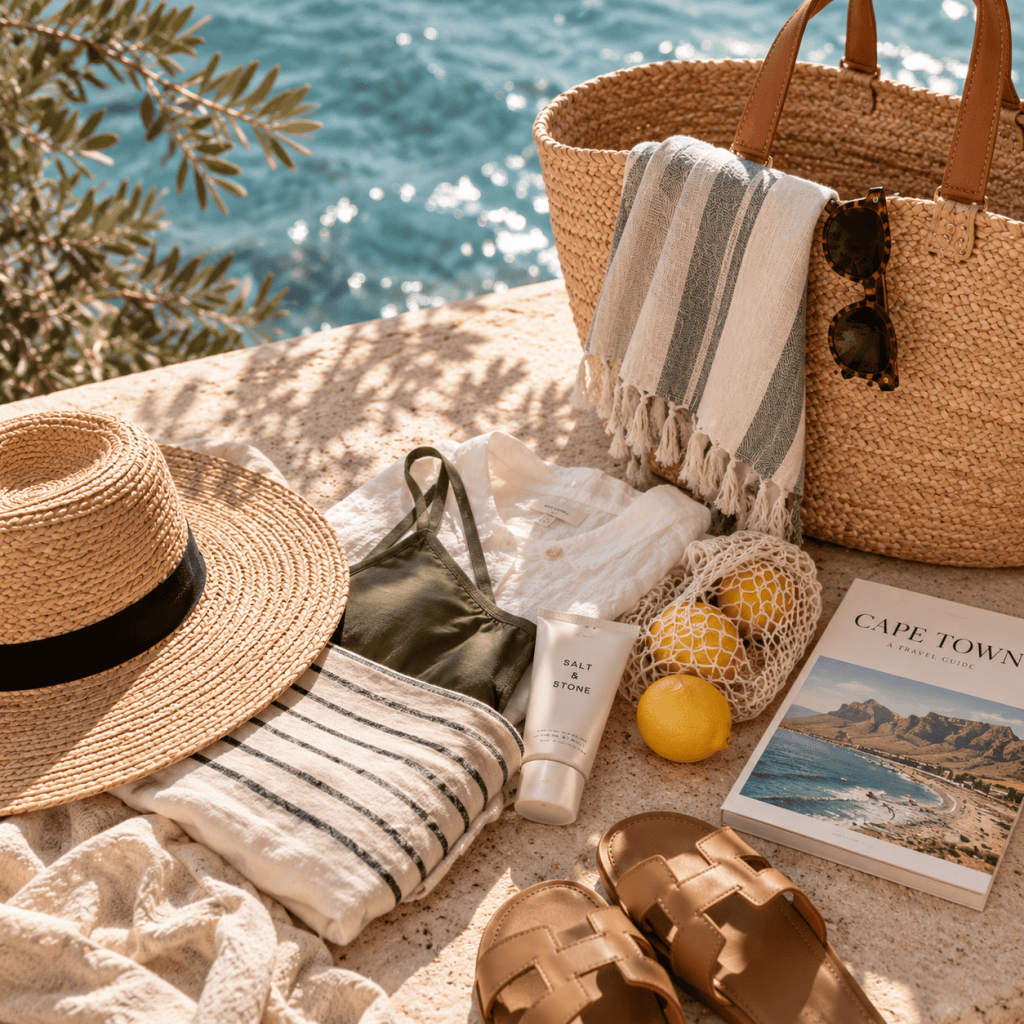
We’re delighted to welcome you to our beautiful country. Here’s our quick-reference packing guide to a few essentials you shouldn’t be without on a Cape Town shoot in spring and summer.
Our best advice: pack and dress like an onion — layers, layers, layers. You can genuinely feel four seasons in one day here. And please don’t underestimate the African sun — it is hot, and you will get burnt. Stay covered up, especially during the hottest hours of the day, between 12h00 and 15h00.
Cape Town Weather | Spring & Summer
Cape Town enjoys warm, sunny weather for most of spring and summer, making it the perfect time to explore the city and its beautiful beaches. Days are typically bright and dry, with temperatures ranging from 20–30°C, although occasional heatwaves can push things even higher.
Even in summer, Cape Town is famous for its strong south-easterly wind — known locally as the “Cape Doctor” — so it’s always worth having a light jersey or jacket for breezy afternoons and cooler evenings.
The sun is strong, even on cooler days, so staying hydrated and wearing sunscreen is highly recommended.
Our best advice? Pack light, breathable clothing, but don’t forget a light layer for windy afternoons and evenings. And a final top tip — take probiotics when you arrive, and keep a rehydration sachet in your day bag.
What to Pack
Essentials
- Sunscreen (we’ll have some in the chaperone vehicles and on set, but you can never have enough)
- After-sun
- Insect repellent, if you’re shooting in our beautiful natural locations
- Any regular medication you take (we have medics on set with a basic first aid kit, but if you take specific medication please bring enough for the trip)
- Lip balm
- A refillable water bottle, so you don’t have to buy plastic ones (Juice Film will provide one)
- Sunglasses / sunhat
Clothing
- Light cotton T-shirts
- Long-sleeve cotton shirts
- Loose-fitting, comfy clothing
- Light colours over dark ones
- Natural fibres over synthetic
- Sturdy, closed-toe shoes or hiking boots
- A hat – wide-brimmed, or a snug baseball cap
- Sunglasses
- A scarf or sarong to keep over your shoulders and protect your neck (Juice Film will provide one)
- A warm jacket or sweater for early mornings and evenings — it can get chilly
Staying Hydrated and Cool
Dehydration checklist
- Speak to the medic on set
- Hydrate immediately with water and rehydration salts (we’ll have these on set)
- Move into shade if you’re too hot, or somewhere warm and sheltered if you’re too cold
- Remove excess clothing — shoes and socks included
- Put a cold, wet cloth at the base of your neck for instant relief
- Drink water first thing in the morning and last thing at night — you need to rehydrate overnight
- Sip water throughout the day rather than waiting until you’re thirsty. The colour of your urine is a good guide — the clearer, the better
- Choose sugar-free juices; vitamin C helps keep you nourished and active
- Limit your alcohol intake, or drink a glass of water between each drink
- Coffee and caffeine are dehydrating too
- Avoid the peak sun hours — stay in the shade and keep covered. South Africa is hot!
- Resist the urge to “tan” — it will happen naturally, and forcing it is the fastest way to sunstroke
Myths and Legends of Table Mountain
Umlindi Wemingizimu
A well-known legend tells of the African god Tixo, God of the Sun, who — together with the earth goddess Djobela — conceived a son named Qamata, the creator of the world. When the Great Dragon of the Sea grew jealous and tried to stop Qamata from making dry land, Qamata called on his mother Djobela for help. She brought four giants to life and placed them at the four corners of the earth, the largest guarding the gateway to the south.
After many battles with the Great Dragon, the giants fell one by one, each asking to remain as guardians of the earth. Djobela granted their wish and turned them into mountains. The mightiest of them all, Umlindi Wemingizimu — “the watcher of the south” — became Table Mountain.
The Governor’s Son
Another legend tells of a governor’s son who was tricked into playing the silver flute of a leper who held a grudge against his father. When the son fell ill with the same incurable disease, he was cast out and lived the rest of his days alone on the mountain’s slopes, with only his silver flute for company. To this day, some say that in the early evening you can still hear the haunting strains of a flute melody drifting down the mountain.
 The Juice Journal